Hunting is easier to start than many people think. These seven steps take a new hunter from curious to the field.
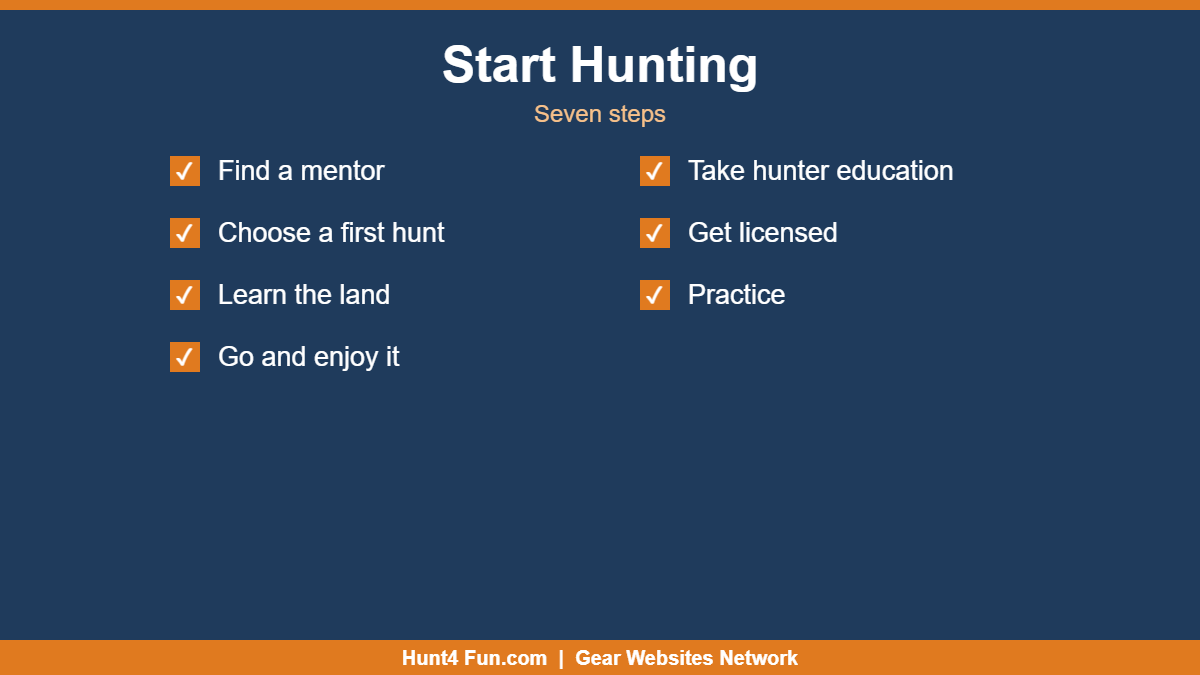
Step 1: Find a mentor
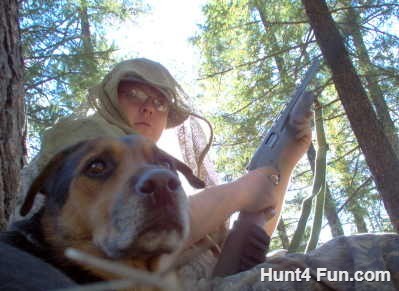
An experienced friend, family member or volunteer mentor is the fastest way to learn. Hunting clubs, conservation groups and state agencies can help connect new hunters with mentors.
Step 2: Take hunter education
Sign up for a hunter education course through the state wildlife agency. Many states offer an online course followed by a field day.
Step 3: Choose a first hunt
Small game, doves and spring turkeys are excellent first hunts. Read Planning a First Hunt for the details.
Step 4: Get licensed
Buy a hunting license and any tags or stamps the hunt requires. Check application deadlines for big game draws.
Step 5: Learn the land
Find public land open to hunting, study maps and scout before the season.
Step 6: Practice
Practice with the equipment that will be used on the hunt until it is second nature, and review Hunting Safety.
Step 7: Go and enjoy it
Pack water, food, layers and first aid, tell someone the plan and head out. Success is measured in more than game taken.
Explore the network
Every species in the Hunting Websites network has its own site. Browse the photo gallery at Hunting Buyers Guide.com to find the next hunt.
Common first-season mistakes
- Waiting until the last minute to take hunter education
- Missing big game application deadlines
- Skipping practice before the season
- Underdressing for cold mornings
- Heading out without telling anyone the plan
Make it a habit
The best way to become a good hunter is to go often. Short hunts close to home teach more than one big trip a year. Each season builds on the last, and before long new hunters become the mentors for the next group.
Ask for help
State wildlife agencies have staff who answer questions from new hunters every day. Call or email the regional office for advice on where to hunt, what seasons fit a beginner and how to find a mentor. Local sporting clubs and conservation groups are also glad to help new hunters get started.
Every experienced hunter started exactly here, with a first step and a willingness to learn.