For many hunters, camp is the best part of the season. It is where plans are made at night, coffee is poured before dawn and stories are told around the fire.
Choosing a camp
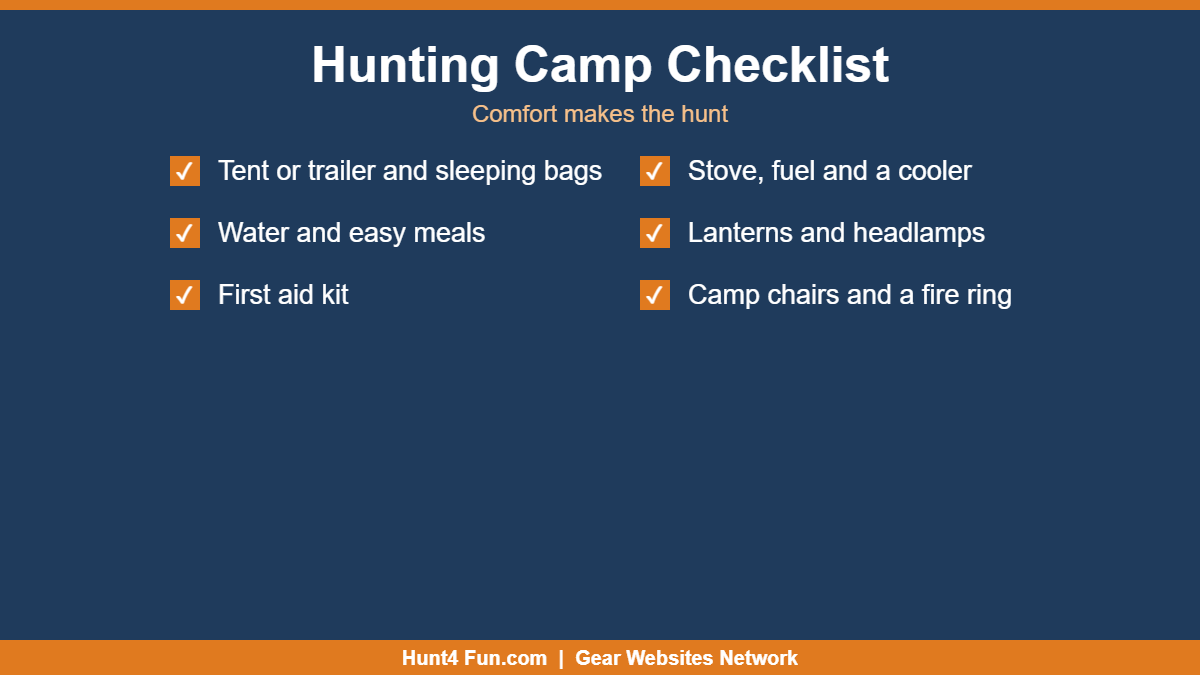
Camps range from a tent at a trailhead to a cabin or trailer used year after year. A good site is level, close to the hunting area, safe from flooding and legal for camping. Many public lands limit how long a camp can stay in one place.
Shelter and sleep
A warm night’s sleep makes the next day’s hunt possible. Sleeping bags rated well below the expected low temperature, insulated pads and a dry tent or trailer are the foundation of camp.
Cooking and water
Simple, hearty meals keep hunters going. A two-burner stove, a cooler, easy breakfasts and a hot dinner are enough. Water is critical in dry country; carry plenty or know reliable sources and how to treat the water.
Light and power
Lanterns, headlamps and spare batteries make early mornings and late nights easier. Many camps now carry a small solar panel or power bank to keep phones, GPS units and radios charged.
Camp safety
- Store firearms unloaded and secure in camp
- Keep food away from bears in bear country
- Follow fire restrictions and keep water by the fire
- Carry a first aid kit and know the nearest help
- Leave the site cleaner than it was found

Camp traditions
Every camp develops its own traditions: the first-morning breakfast, the story told every year, the photo of everyone at the truck. Those traditions are a big part of why hunters return to the same camp for decades.
Leave no trace
Pack out trash, use existing fire rings and camp on durable ground. Respecting the land keeps camps open for the next group of hunters.
Packing the truck
Make a camp checklist and keep it with the gear. Pack the essentials first: shelter, sleeping gear, water, food, stove, light and first aid. Add comfort items last. Check the spare tire, carry a shovel and tow strap on rough roads, and bring extra fuel when camps are far from town.
Camp chores
Sharing chores keeps camp running smoothly. One hunter handles water and the fire, another the cooking, another the dishes. Rotating jobs means everyone gets a turn at the easy ones.